
The Tension of Modern Ministry
In the digital age, church leaders often find themselves walking a precarious tightrope. On one side, we are tasked with maintaining the sacred, undistracted focus of traditional worship. On the other, we are pressed by the necessity of modern technology—lyric projection, live streaming, and stage lighting—to communicate with a generation raised in the age of information.
How do we use these tools without turning our services into a tech-heavy performance that creates more distance than connection? The answer lies in shifting our perspective: technology should not be an additive to the service, but an invisible bridge that helps the congregation cross into a deeper encounter with the Divine.
The Philosophy of 'Invisible' Technology
Great production is often invisible. When a worship director plans a service, the goal shouldn't be to showcase the software or the hardware; the goal is to remove friction.
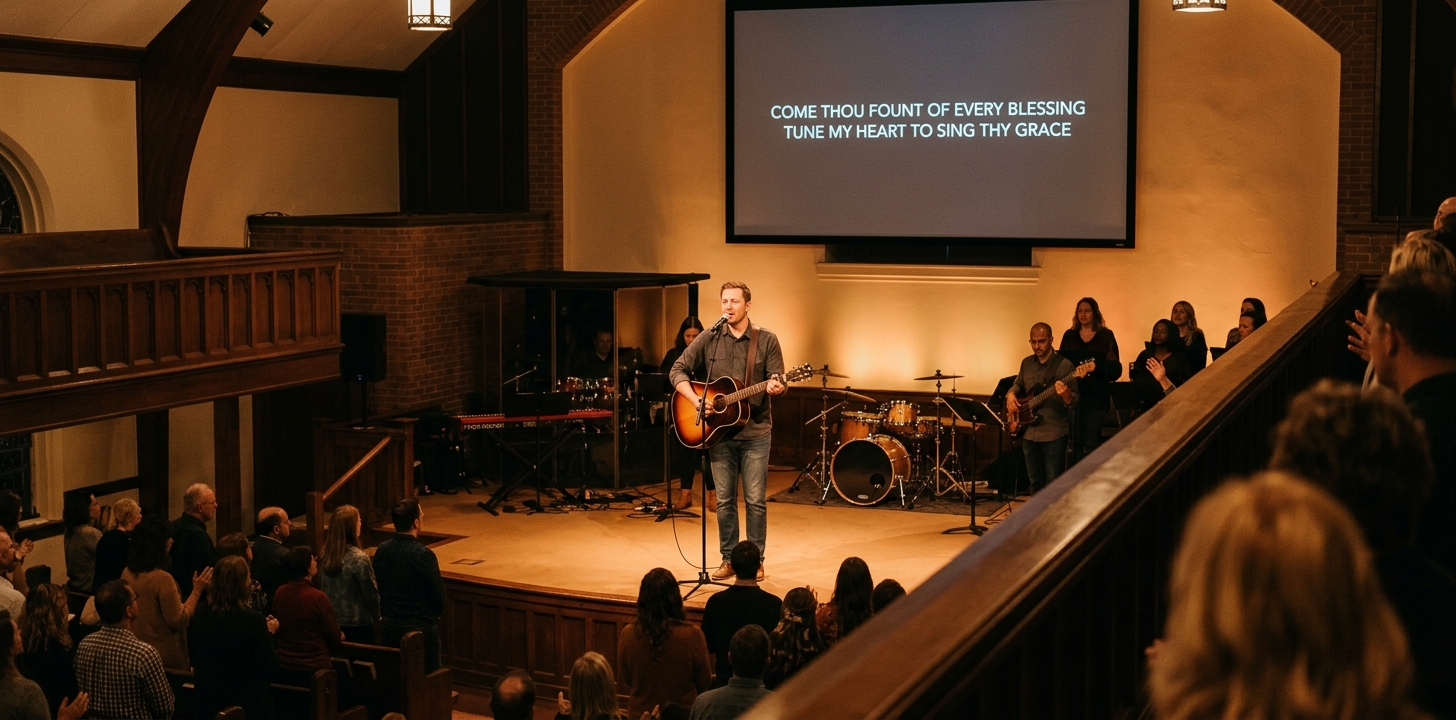
Think about the last time you struggled to read a lyric on a screen because the font was too small or the contrast was poor. In that moment, the technology became a barrier. The congregant was forced to think about the screen rather than the truth being sung. True stewardship of church technology means curating an experience so seamless that the worshiper forgets the screen exists. When the lyrics flow intuitively and the media enhances the message rather than competing with it, the focus remains exactly where it belongs—on the heart of the believer.
Intentionality in Media Management
Many churches fall into the 'default' trap. They use the same templates, the same fonts, and the same color schemes every week because it is easy. However, intentional media management is an act of pastoral care.
Practical Strategies for Intentionality:
- Color Psychology: Use warm, muted tones for times of prayer and confession to create a sense of intimacy. Use vibrant, clear contrast for congregational praise to foster energy and clarity.
- Lyric Flow: Ensure that slide transitions happen exactly when a phrase ends, not in the middle of a syllable. This requires coordination, but it drastically improves the worship experience for those singing along.
- Visual Hierarchy: Don't crowd the screen. A single, powerful image or a verse with plenty of negative space often carries more weight than a cluttered background that distracts the eye.
Empowering Your Volunteer Team
Technology is only as good as the people running it. Often, we treat the 'media booth' as a technical task, forgetting that these volunteers are ministers. They are the ones controlling the visual atmosphere of the sanctuary.
When you recruit for your tech team, look for more than just technical aptitude. Look for spiritual maturity. A volunteer who understands the theology of worship will anticipate the needs of the congregation far better than one who is simply following a list of clicks. Take the time to pray with your tech team before the service begins. Remind them that their work on the laptop or the soundboard is a direct contribution to the spiritual growth of the people in the pews.
Bridging the Gap Between Preparation and Presentation
Sermon preparation and worship planning often happen in silos. The worship leader picks songs, the pastor writes the message, and the tech team prepares the slides. When these elements remain disconnected, the service can feel fragmented.
By unifying your planning process, you create a cohesive 'liturgy' that carries the congregation from the opening call to worship through the final benediction. Use tools like Cloud of Worship to centralize your media, setlists, and sermon notes. When the entire team is looking at the same map, the journey becomes much more meaningful for the congregation.
Conclusion: The Goal is Transformation
At the end of the day, no software, projector, or lighting rig can produce transformation. That is the work of the Holy Spirit. Our role is simply to clear the path. By embracing technology as a tool for clarity and connection, we can create an environment where the distractions of the world fall away, and our congregations are left with nothing but the truth of the Gospel. Let us commit to building digital bridges that lead people into the presence of the One who matters most.