
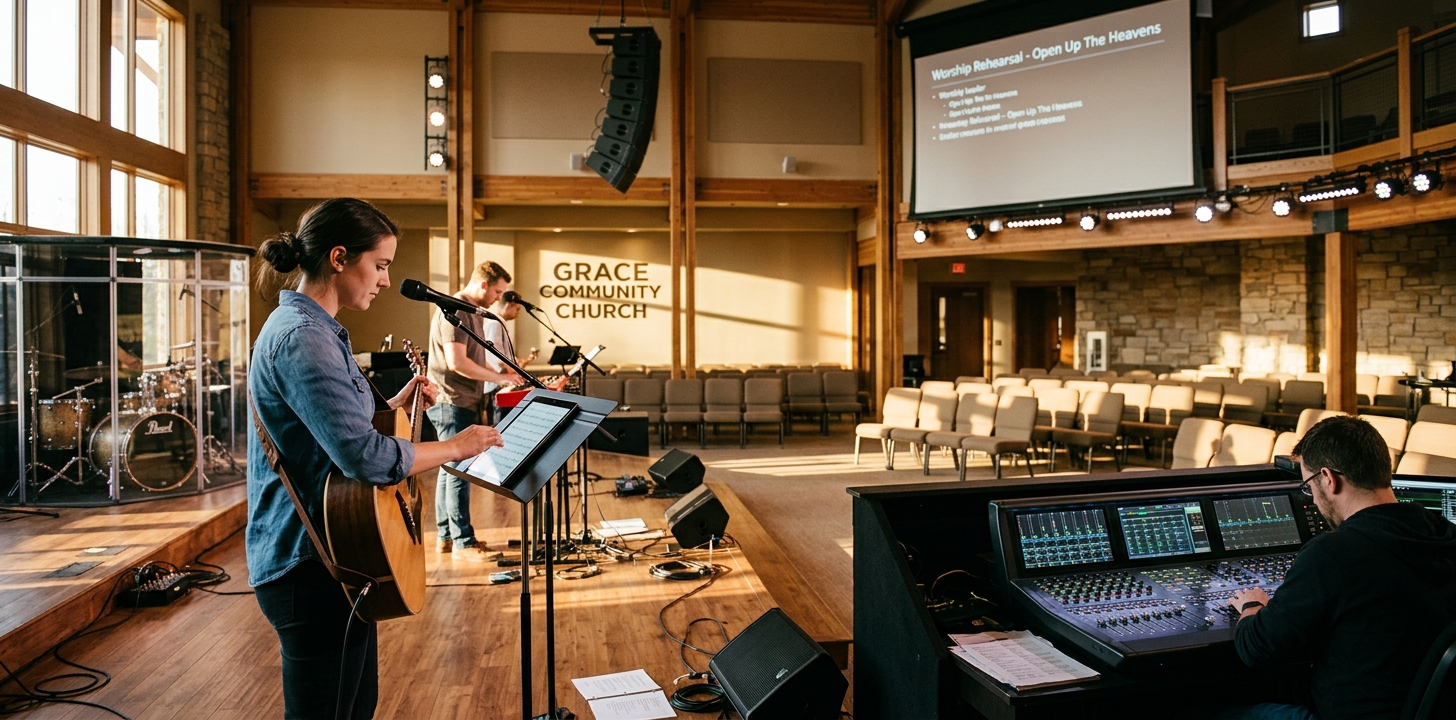
The Hidden Language of Worship
In the landscape of modern church ministry, we often obsess over the 'big' elements: the sermon content, the song selection, and the quality of the band. However, those who have spent years in the trenches of ministry know that the true spirit of a service is often defined by what happens between the moments. These are the transitions—the bridges between a song and a prayer, or a video and a sermon. When these moments are clunky or disjointed, the congregation’s focus shifts from the divine to the technical. When they are seamless, the worship experience becomes a singular, powerful flow.
Why Transitions Matter
Think of a worship service as a narrative. Every service has a beginning, a rising action, a climax, and a resolution. If you interrupt this narrative with long pauses, awkward microphone fumbling, or lyrics that aren’t ready on the screen, you break the 'worship trance.' For a congregation to truly enter into a space of surrender, they need to feel that the leadership is prepared, confident, and led by the Spirit.
Practical Strategies for Seamless Flow
Achieving this level of flow doesn’t require expensive hardware; it requires intentionality and a shift in how you plan your liturgy. Here are four strategies to elevate your transitions:
- Eliminate Technical Silence: Silence can be powerful, but unintentional silence is distracting. Use ambient pads or soft instrumental loops during transition times. This provides a 'cushion' for the congregation, allowing them to remain in a posture of reflection while tech teams prepare for the next segment.
- Pre-Plan Your 'Bridges': Don't just list songs in a set; list the transitions. Decide who is speaking, what the transition will be (a scripture, a prayer, or a musical segue), and who is responsible for initiating it. Communication between the worship leader and the media team is paramount.
- Optimize Your Lyric Projection: Nothing halts momentum like a wrong slide or a black screen. Using platforms like Cloud of Worship allows your tech team to prepare ahead of time, ensuring that lyrics appear precisely when the congregation needs them. If your lyrics are a second behind, the congregation will look down at their phones instead of up at the cross.
- The Power of the 'Hand-off': Ensure that your worship leader and your speaker are in constant communication. The 'handoff' from the final song to the sermon should be practiced. A well-placed bridge song or a specific transition phrase can act as a bridge that guides the congregation from a musical encounter to a biblical teaching.
Empowering Your Volunteers
Seamless transitions are a team sport. Your sound engineer, lighting technician, and projectionist are not just 'button pushers'—they are worship leaders. When you include them in the planning process, they stop reacting to the service and start participating in it.
Help your team understand the why behind the what. When they understand that the crossfade between the final chorus and the prayer is a critical moment for congregational response, they will treat it with the same reverence as the lead singer treats a high note. Use your church management tools to share the order of service in advance, allowing your volunteers to practice their cues.
From Logistics to Liturgy
Ultimately, the goal of improving your transitions is to remove the friction of the human element so that the congregation can connect with the Holy Spirit. We want our technology and our planning to be so good that they become invisible. We aren't trying to create a concert-like production; we are trying to create an environment where the distractions of the modern world fall away.
As you look toward this coming Sunday, challenge your team to identify the 'dead zones' in your service. Is there a moment where the energy drops because the technology isn't ready? Is there a gap that feels awkward for the attendees? By tightening these transitions, you aren't just running a better service—you are creating a safer, more focused space for your people to encounter the presence of God. Remember, excellence is not about perfection; it is about honoring the space you have been given to lead.